
Maryland SB911
Education, Energy, and the Environment Committee 3 March 2026

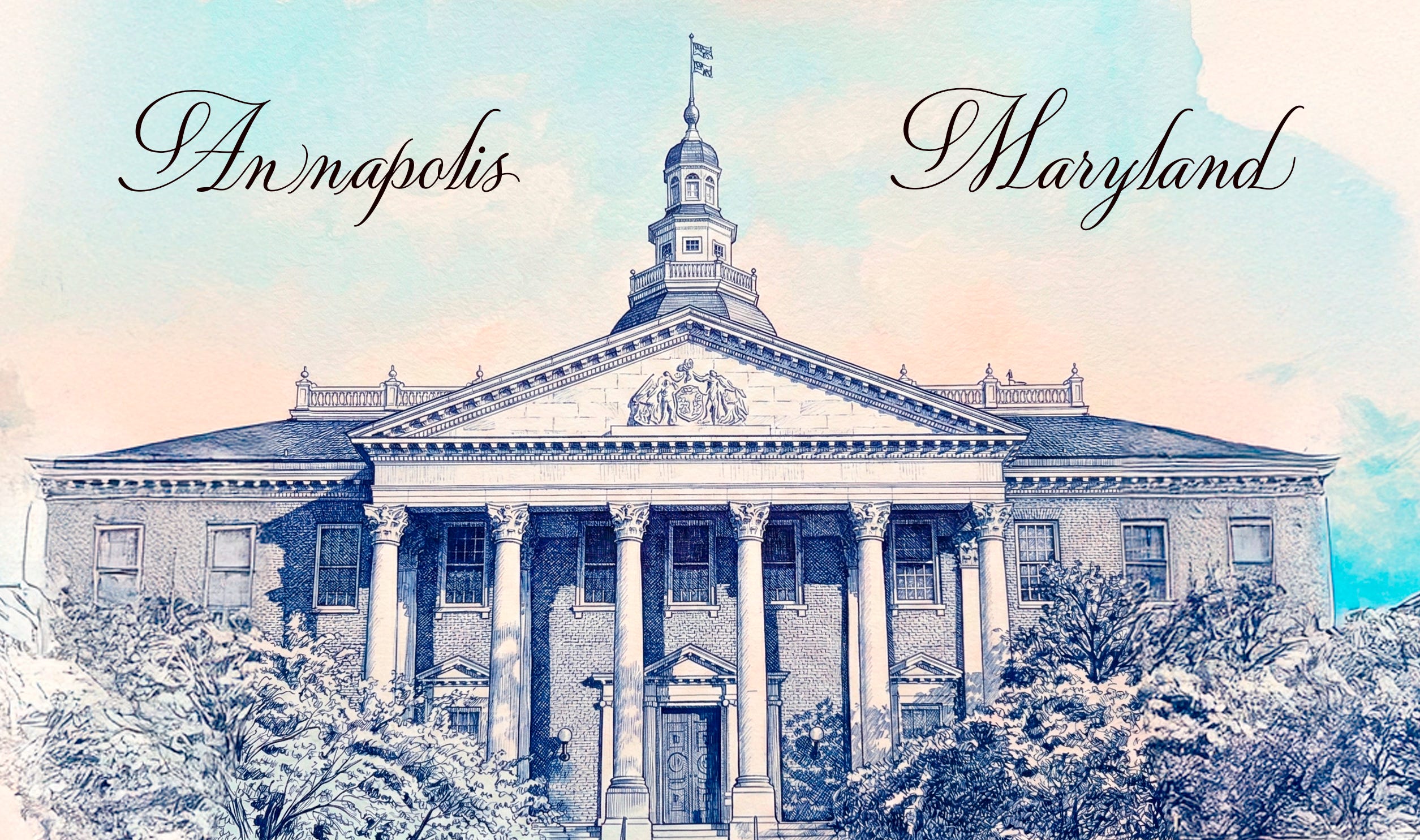
On March 3, 2026, Maryland’s Senate Education, Energy, and Environment Committee met to discuss a topic that was once considered science fiction. The focus was Senate Bill 911, which aims to ban “weather engineering” in the state.
In Annapolis, lawmakers are now taking atmospheric sovereignty seriously. Ideas once seen as fringe are now part of the mainstream debate, and legislators must decide whether to ban human-made climate change or keep all options open as the climate continues to warm.
The Florida Model: A Preemptive Approach
Senator Johnny Mautz introduced SB 911 to give Maryland clear authority over its airspace. He pointed out that Frederick, Garrett, and Washington counties already have local rules about weather modification, but he wants a consistent statewide ban. There is no sign of “sky-seeding” in Maryland at this time, so this bill is intended to address a potential gap before any problems arise.
Mautz based his bill on the “Florida model,” a legal approach from a conservative state that Maryland, a liberal state, is now considering for its own climate concerns. The bill also proposes that fines for illegal weather engineering be directed to the Bay Restoration Fund. It is somewhat ironic that money from cloud manipulation could help clean up the Chesapeake Bay.
“It’s modeled after an existing law in the state of Florida, and it’s a novel approach. It’s something that’s been discussed widely.”
By proposing this ban early, Mautz hopes to prevent private companies or federal agencies from starting large-scale weather projects in Maryland. He believes the safest way to handle this new technology is to stop it before it starts.
Public Concern and the 8,000 Investigations
Valerie Ferrell, an attorney and policy monitor, testified that people are more concerned than ever about what happens in the sky. She pointed out that Florida is dealing with about 8,000 investigations because of new reporting rules. Ferrell suggested Maryland should take extra steps, for example, checking airports for devices that could release substances into the air.
Her testimony showed a gap between public opinion and scientists’ views. Scientists see the “lines in the sky” as normal contrails, but some people believe they are signs of environmental harm. Ferrell’s request for a “time limit” on investigations shows that people want quick government action as more attention is paid to the sky.
“People are really concerned about what’s going on in our skies and our atmosphere, the air quality, the health, the environmental effects of that.”
The mix of policy and public worry shows how hard it is to regulate things we cannot see. When a state agency receives 8,000 citizen reports, just handling all those complaints is a big part of managing “weather engineering.”
The Threat to “Critical Research”
Quentin Scott, from the CCAN Action Fund, strongly criticised the bill, saying it could unintentionally harm important scientific work. He mentioned the “Hansen Warning,” Dr James Hansen’s prediction that global warming is accelerating faster than expected. Scott said that Solar Radiation Management (SRM) research is not a conspiracy, but could be a last-resort tool to help the planet.
Scott tried to make it clear that real atmospheric science is different from “chemtrail” theories. He warned that SB 911 could add to a worrying trend of turning anti-science ideas into law, making Maryland unwelcoming to researchers working on ways to cool the planet. He quoted environmentalist Bill McKibben, saying the climate crisis is so serious that we need to know how to discuss these technologies.
“The introduction of SB 911 unfortunately follows a concerning trend of state ban bills... and unthinkably targets scientific research.”
This situation illustrates a tough choice: by trying to stop environmental manipulation, lawmakers might ban the research that could help us survive. The bill sets up a conflict between scientists who want options to cool the planet and lawmakers who want to keep the atmosphere untouched.
Rainmakers vs Geoengineers
Grayson Gee from Rainmaker Technology Corp, a Silicon Valley-backed startup, offered a different perspective. He clarified that “geoengineering” refers to altering global climate patterns, whereas “cloud seeding” involves local interventions to modify rainfall in specific areas. Rainmaker uses AI and drones to increase rainfall in drought-stricken areas.
Gee warned that a broad ban with felony penalties would take away an “innovative technology” that farmers have used openly for 70 years. He said cloud seeding does not change the climate, but simply helps rain fall where it is needed. This shows that SB 911 might not clearly distinguish experimental chemicals from the useful tools farmers rely on during droughts.
“It would seem imprudent for this legislature to prohibit an innovative technology that could serve as a tool... for water supply management in a future climate.”
Gee’s perspective shifted the committee’s discussion from abstract theories to more practical concerns, such as investment and water security. He warned that passing the bill could hinder Maryland’s ability to manage future resource challenges.
The Committee’s Verdict: A Shift Toward Study
The hearing took a different direction when the committee decided to consider a study rather than a ban. Senator Ronald Watson shared his experience in Dubai, where cloud seeding is a common and essential part of the water supply. This international example made lawmakers question why Maryland should make it a felony if other places rely on it to survive.
Senators Cheryl Kagan and Katie Fry Hester agreed, asking if it makes sense to make these technologies felonies when they could help Maryland’s farmers in the future. The committee was clearly uneasy about criminalising something not yet fully understood. Instead of banning it right away, they decided to study where “weather modification” stops and “geoengineering” starts.
The session ended without a vote. Senator Mautz agreed to draft an amendment to turn the bill into a formal study request. For now, the risk of a felony ban has been replaced by a period of review and discussion.
This leaves Maryland facing a central question: Should the state regulate new technologies to prevent problems, or might the climate crisis ultimately force the adoption of “weather engineering”? For now, Maryland has chosen observation and study over outright prohibition.