
Kentucky HB60
Natural Resources & Energy (H) Committee

This report was synthesised from official meeting audio using an AI trained on GeoLawWatch’s proprietary archive of bills, calendars, and background research. While the AI assisted with the initial transcription and formatting, the final content has been reviewed for accuracy to ensure it meets our legislative reporting standards
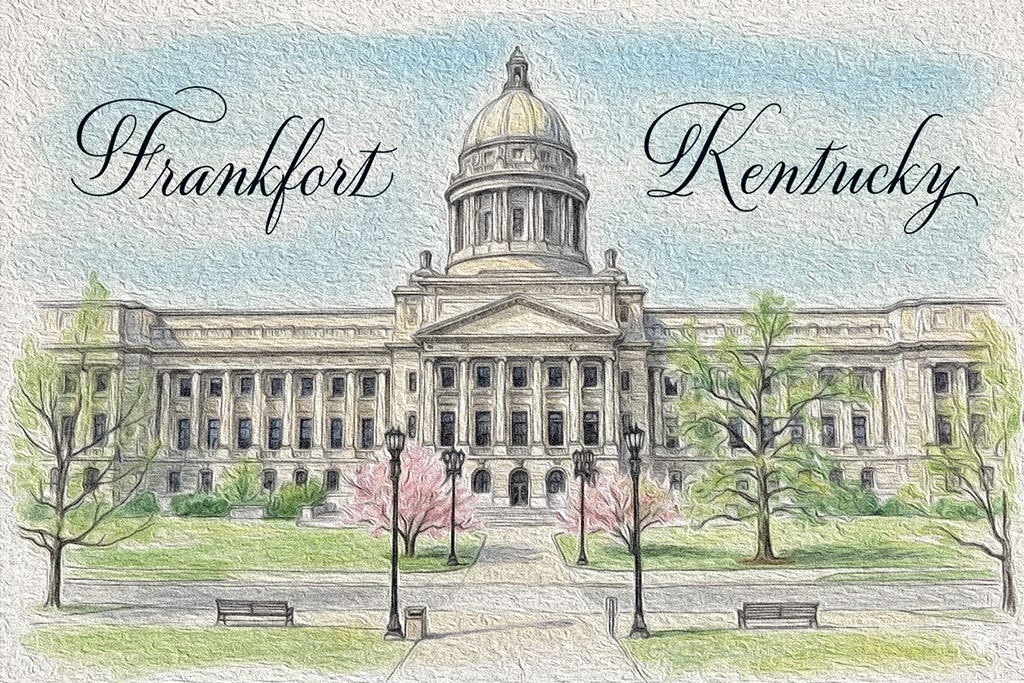
The House Natural Resources & Energy Committee hearing on February 5, 2026, marked a significant assertion of state sovereignty under the 10th Amendment regarding Kentucky’s atmospheric policy. This legislation is a proactive response to growing federal and international interest in geoengineering, not a reaction to speculation. Chairman Gooch highlighted the need for this measure, citing his previous efforts to introduce similar protections when large-scale atmospheric interventions were first discussed publicly. As federal mandates for geoengineering research expand, HB60 formally declares that Kentucky does not consent to its airspace being used for climate experimentation.
HB60 aims to establish a comprehensive, preventative ban on intentional atmospheric manipulation, specifically geoengineering, within Kentucky’s airspace. By defining these activities as criminal atmospheric pollution, the bill prohibits the release of contaminants intended to alter weather patterns or reflect solar radiation.
The hearing began with a review of a Committee Substitute intended to clarify the bill’s jurisdiction and protect the state’s key industries.
The Committee Substitute: Scope and Refinements
Legislative analysts are concerned about preventing regulatory overreach that could affect established industries. To address this, Representative John Hodgson introduced House Committee Substitute (PHS sub 2), which distinguishes between prohibited high-altitude atmospheric interventions and legitimate ground-level commercial activities. This clarification was necessary to address concerns from stakeholders in telecommunications, agriculture, and renewable energy about potential litigation against standard operations.
The substitute explicitly excludes releases from ground-level sources, ensuring the bill applies only to stratospheric and high-altitude interventions.
This hold harmless provision serves as a safeguard. By limiting the bill to intentional, high-altitude environmental manipulation, the committee ensures it remains a targeted policy tool rather than a broad industrial regulation.
Sponsor Testimony: The Case for Atmospheric Protection
Representative John Hodgson and Senate Sponsor Steve Rawlings focused their testimony on recognised federal research, moving the discussion away from conspiracy theories. They argued that immediate action is needed to prevent irreversible environmental and health consequences.
The central arguments provided by the sponsors included:
Distinction of Federal Research Mandates: Hodgson differentiated between the Biden White House study on Solar Radiation Modification (SRM) and the Trump-era EPA documentation, which notes an 80-year history of federal weather modification research. This indicates that geoengineering has moved from theory to a viable federal policy objective.
Scientific and Historical Risk Modelling: To illustrate the risks of solar dimming, Rep. Hodgson cited the 1815 eruption of Mount Tambora. The resulting “Year Without a Summer” caused global crop failures and famine due to sulfur dioxide blocking sunlight, providing a historical parallel to the risks of intentional stratospheric aerosol injection.
Assertion of State Sovereignty: Grounded in the 10th Amendment, the bill defends the “inherent right” of Kentucky citizens to determine their own atmospheric policy, rather than allowing outside interests to make that decision.
The sponsors emphasised that, despite being presented as solutions to climate change, the uncertainty surrounding these experiments requires a state-level prohibition to prevent Kentucky from becoming a testing ground without consent.
Committee Inquiry and Analytical Synthesis of Q&A
During the inquiry phase, committee members examined enforcement logistics and clarified the bill’s impact on scientific research and public perception.
Enforcement Logistics (Rep. Blandon)
In response to concerns about detecting violations at high altitudes, the sponsors explained that enforcement will focus on ground-based infrastructure. This includes inspecting spray rigs, storage tanks, and chemical inventories at airfields, as well as relying on whistleblower testimony from personnel involved with specialised aircraft.
Scientific Research & Cloud Seeding (Rep. Blackman)
The committee reviewed how the cloud-seeding ban would affect university research. Rep. Hodgson confirmed that cloud seeding, even for drought mitigation, is prohibited under HB60. He recommended a wait-and-see approach, suggesting Kentucky observe the outcomes in western states currently experimenting with silver iodide to avoid unintended consequences such as flash flooding or groundwater contamination.
Public Perception vs. Hard Evidence (Reps. White and Smith)
Legislators addressed the “chemtrail” narrative on social media. Rep. Hodgson clarified that the “white lines” seen in the sky are standard aviation contrails, formed from water vapour in high humidity. He emphasised that HB60 is a proactive measure to prevent such activities from starting in Kentucky without state consent.
Federal/State Jurisdiction: Assertion of Non-Consent
Regarding state and federal authority, the analyst notes the strategic use of a notice requirement. While Kentucky peace officers cannot arrest federal officials for federal actions, issuing a notice formally asserts non-consent. It creates a legal record of the state’s lack of authorisation, which could be important in future litigation.
Procedural Outcome and Committee Consensus
The committee’s adoption of the substitute and its favourable report indicate strong legislative momentum. The bill passed unanimously, reflecting agreement that its preventive approach is a necessary exercise of state authority.
The following roll call reflects the vote for the adoption of the House Committee Substitute and the favourable report of the bill.
Final Disposition and Next Legislative Stages
House Bill 60 is a high-priority measure in the 2026 Regular Session. After receiving a favourable committee report, the bill had its second reading on February 6, 2026, and was referred to the Rules Committee.
The bill’s next step is a full House vote. As the sponsors noted, Kentucky is part of a national trend, with 34 other states considering similar legislation on atmospheric sovereignty. HB60 is a preventative measure to ensure Kentucky’s environment and agricultural security remain under state control.