
Iowa HF2173
Environmental Protection Committee 18 Feb 2026

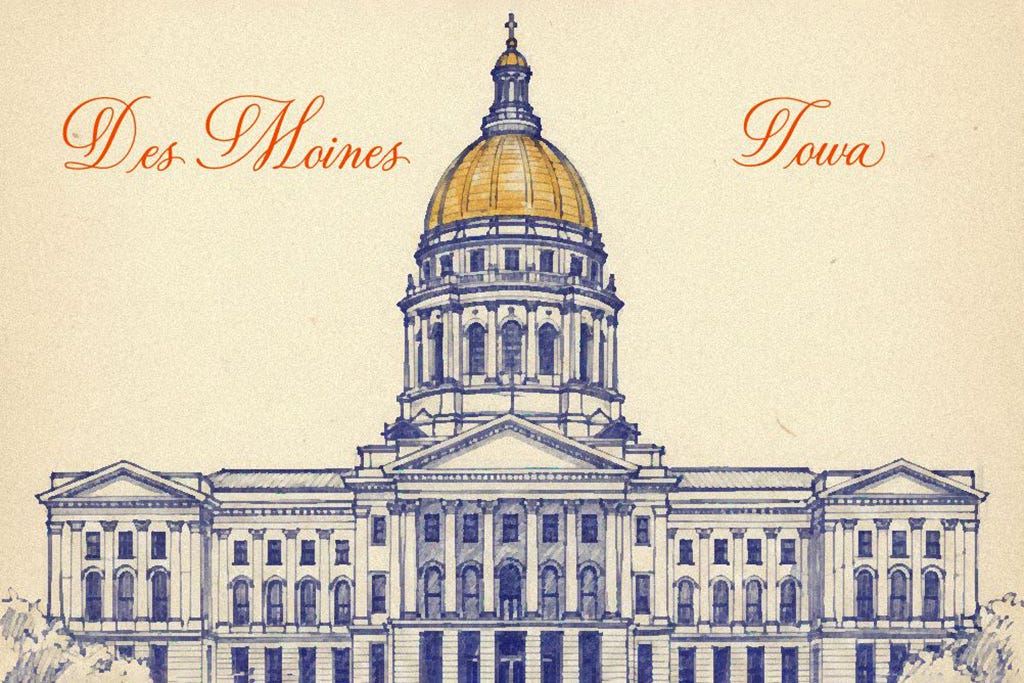
On February 18, 2026, the House Environmental Protection Committee reviewed House File 2173, a bill regulating weather engineering. This legislation addresses atmospheric sovereignty and the risks posed by unregulated geoengineering to Iowa’s agriculture and environment. By proposing a ban on the intentional release of contaminants for weather modification, the committee seeks to manage emerging technological challenges under state oversight.
HF 2173 signals a stronger House position on atmospheric regulation. Unlike previous bills, HF 191 and HF 927, which relied on administrative rule-making, HF 2173 establishes a strict criminal framework. By classifying violations as a Class D Felony, the bill treats atmospheric modification as a serious crime rather than a regulatory issue. This approach aims to protect Iowa’s airspace before commercial or interstate weather modification expands.
With these technical and criminal parameters in place, the committee evaluated the practical and legal arguments presented by the bill’s floor manager.
The Case for a Geoengineering Moratorium
Representative Sam Wengryn, floor manager for HF 2173, delivered his testimony in a measured, cautionary tone, emphasising a “guardrail” approach. He presented the bill as a proactive solution to a regulatory gap in the Iowa Code. Wengryn argued that establishing a legal baseline is necessary to prevent Iowa from becoming an unregulated site for atmospheric experimentation.
Core Arguments for HF 2173:
Addressing Statutory Gaps: Wengryn noted that the current code is silent on weather modification, leaving a “grey area” regarding liability and jurisdiction.
Monitoring Regional Activity: Wengryn cited practices in North Dakota, Texas, and Utah where aircraft and drones disperse silver iodide. He warned that Iowa lacks a framework to address such activities if they occur in its airspace.
Resource Protection: Wengryn argued that cloud seeding in neighbouring states could reduce jet stream moisture, potentially depriving Iowa’s environment of the resources it needs.
Fiscal Threshold for Entry: Wengryn noted that the bill requires entities planning activities costing $350,000 or more to seek state authorisation, creating a financial barrier and enabling future regulatory oversight.
Phased Strategy: The bill establishes a moratorium and outlines a future transition to permit, license, and insurance requirements.
Representative Wengryn announced that the current subcommittee amendment would be withdrawn and replaced with a future floor amendment to address concerns from Iowa’s airport commissions and the agricultural sector.
To illustrate the need for the legislation, Wengryn cited a Texas farm that flooded after nearby cloud seeding. He explained that this case highlights the challenge of proving causation in tort law. Wengryn argued that a regulatory framework is needed to help the state determine legal causation and assign liability for artificial environmental events.
Critical Interrogations and Policy Scepticism
The committee deliberation featured significant scepticism from the minority, reflecting tension between the sponsor’s focus on future atmospheric risks and the ranking member’s emphasis on immediate environmental priorities.
Representative Bob Kressig questioned the bill’s necessity, noting that the Senate previously ignored similar legislation and raising concerns about redundancy. Wengryn responded that HF 2173 is more focused than earlier Senate files, such as SF 142 or SF 2208, which he described as “too broad” and included extreme measures such as authorising the shooting down of aircraft.
Representative Mary Lee Madison, the Ranking Member, posed several critical challenges to the bill’s utility:
Policy Opportunity Cost: Madison argued that the committee’s focus on atmospheric “wishful thinking” comes at the expense of addressing tangible issues like water pollution.
Enforcement Impracticability: Madison highlighted the difficulty of monitoring chemicals once dispersed in moving clouds, casting doubt on the state’s ability to enforce the law effectively.
Formal Action and Vote Results
Chair Dean Fisher conducted the roll call vote. Representative Wengryn moved the bill, emphasising in his closing that HF 2173 provides a necessary safeguard that can be updated as technology and needs change.
The committee approved the bill by a 9-4 vote. Chair Fisher then moved the meeting to further business.
Procedural Challenge to Committee Efficacy
After the vote, Representative Bob Kressig questioned the committee’s productivity, asking if HF 2173 was the only House bill planned for the year. Chair Fisher replied that no other House files were scheduled and that future work would depend on Senate files.
Kressig further questioned the committee’s purpose, asking, “Why does this committee even meet then?” He argued that important environmental issues, especially water pollution, were being overlooked. Chair Fisher ruled him “out of order” and stated that the committee was not the place to debate its own existence or the broader legislative calendar. The meeting was adjourned after this exchange.