
Idaho S1269
Senate Resources & Environment Committee 25 Feb 2026

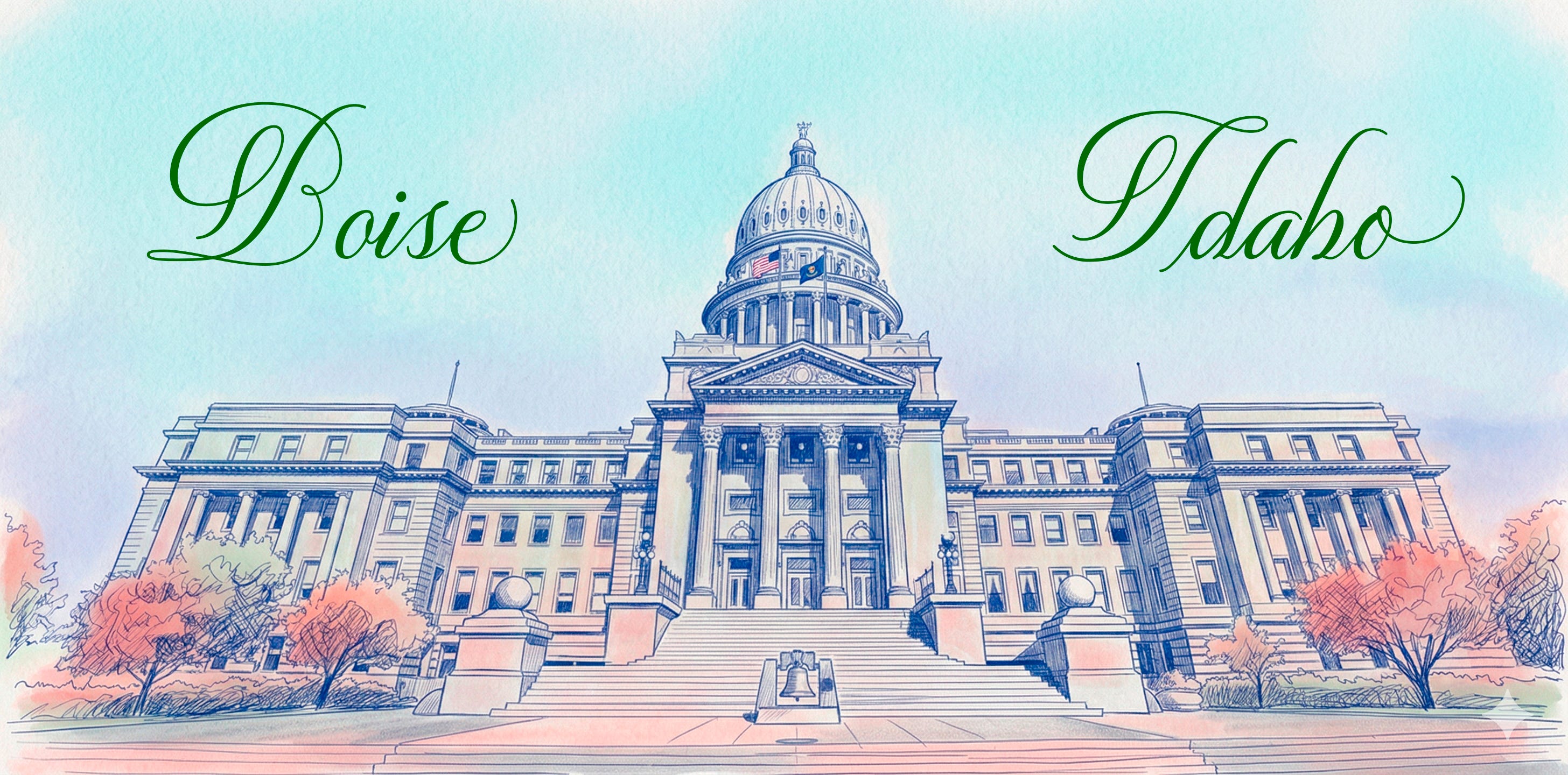
On February 25, 2026, the Idaho Senate Resources and Environment Committee met to consider Senate Bill 1269. This bill aims to formalise and stabilise Idaho’s water management protocols by clarifying statutory requirements. While cloud seeding was previously managed at the administration’s discretion, SB 1269 proposes a transparent, codified approach. The hearing clarified the bill’s legislative intent: to ensure long-term stability and public accountability for a key aspect of Idaho’s natural resource management.
Before the sponsor’s presentation, the committee attempted to hear virtual testimony from Sarah Allstott, who opposed the bill. Due to technical issues, Ms Allstott was unable to participate, and the committee proceeded to the sponsor’s analysis.
Sponsor Presentation: Analysis of Senate Bill 1269
Senator Tammy Nichols introduced Senate Bill 1269 as a necessary shift from administrative practice to statutory law. She explained that while cloud-seeding authority already exists, the bill provides “transparency as a remedy” to address public uncertainty. The goal is to establish a consistent framework that remains stable despite changes in agency personnel or leadership.
Senator Nichols outlined several key statutory and amendatory updates:
Legislative Findings (Preamble): The bill clarifies the program’s purpose and objectives, establishing cloud seeding as a tool for state water security.
Section 42-4302 (Definitions): The bill defines key terms such as “cloud seeding” and “operational periods.” Senator Nichols stated that these definitions are necessary for consistent interpretation and application by agencies and operators.
Section 42-4303 (Reporting Framework): This section makes reporting a statutory requirement under the Idaho Water Resources Board. It mandates public meetings and requires both annual and monthly reports during active operations to ensure ongoing disclosure.
Accountability Mechanisms: Senator Nichols explained that Section 8 introduces a suspension mechanism that revokes authorisation if statutory disclosures are not made. Section 42-4304 clarifies liability protections for authorised operations, excluding acts of gross negligence or willful misconduct.
State vs Federal Standards: The bill affirms state control over water management. Senator Nichols stated that federal reporting is informational and “does not replace Idaho’s statutory standards,” highlighting the need for a strong, independent state framework for transparency.
After the presentation, the committee asked no questions and moved to stakeholder feedback on the program’s practical applications.
Stakeholder Testimony: Support and Practical Applications
Stakeholder testimony shifted the committee’s focus from legal structure to the practical, science-based benefits of cloud seeding for Idaho’s agriculture and water resources.
Braden Jensen (Idaho Farm Bureau Federation)
Representing the Idaho Farm Bureau, Jensen described cloud seeding as a “proven method” and essential for water storage. He stated that the Farm Bureau’s support depends on adherence to the prior appropriation doctrine and on ensuring that water is managed in accordance with Idaho law. He also commended the bill’s protection of landowner privacy.
Paul Arrington (Idaho Water Users Association)
Arrington emphasised the bill’s role in clarifying the program’s technical scope. He said the statutory definitions would reduce public confusion about “geoengineering” by specifying that Idaho’s program is limited to “wintertime, high-mountain seeding” of existing storms. He praised the sponsor for creating a “workable and meaningful” framework.
Brian Murdock (Bingham County Farmer)
Murdock described problems with the current informal information system. He shared an example of a farmer who suspected “water stealing” after localised snowfall. Murdock said he struggled to verify operations through official channels and had to rely on “personal contacts through the IDWR” for information. He argued that SB 1269’s mandatory reporting is necessary to address confusion caused by the lack of accessible, formal information.
With no further public testimony, the committee entered final deliberations.
Committee Deliberation and Legislative Inquiry
The committee deliberated on balancing scientific inquiry with administrative oversight, noting the challenges in proving the program’s exact effectiveness.
Member Perspectives
Senator Doug Okuniewicz expressed scepticism about scientific “proof” of efficacy, noting the difficulty in “designing a study to prove” cloud seeding’s results. Despite reservations, he supported the bill’s transparency goals but reserved the right to consult further with the sponsor before the floor vote.
Senator Kevin Cook stressed the importance of transparency when public funds are used. He supported advancing the bill but reserved the right to change his vote on the floor and suggested further legislation may be needed as the program develops.
Senator Phil Hart offered anecdotal support, noting he had “skied on a lot of snow” produced by the seeding operations.
In her closing statement, Senator Nichols addressed scepticism about “belief-based reality.” She argued that without formal, accessible data, the public fills the gap with assumptions. SB 1269, she said, provides a necessary reference point for future policy discussions.
Final Action and Statutory Compliance
At the end of the discussion, Senator Okuniewicz moved to send Senate Bill 1269 to the floor with a “Do Pass” recommendation. Vice Chair Hart seconded the motion, which passed unanimously by voice vote.